



2025
September
26
Friday

Monitor Daily Podcast

September 26, 2025
Loading the player...
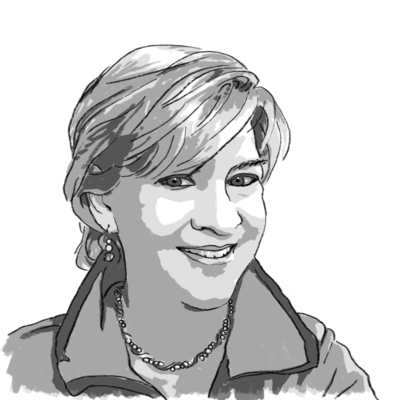
Linda Feldmann
Washington Bureau Chief

Meet José, Santos, and Gina, all non-U.S. citizens who either entered the United States without authorization or lost their legal status. Two have “self-deported” – left the U.S. on their own – and one remains, at least for now. The Monitor’s Sarah Matusek talked to all three for her article in today’s Daily.

The push for self-deportation is a key element of the Trump administration’s goal of removing unauthorized immigrants from the country. There’s even an app for that, and attendant perks, including a $1,000 “exit bonus.” So far, an estimated 1.6 million people have self-deported. But behind the numbers lie intensely human stories, as Sarah’s story makes clear.


You've read of free articles. Subscribe to continue.

News briefs

Former FBI chief James Comey was charged with making a false statement to Congress and obstructing a criminal proceeding. The indictment makes Mr. Comey the first former senior official to face prosecution in connection with one of President Trump’s chief grievances: the long-concluded investigation into Russian interference in the 2016 election. Mr. Trump and his supporters have derided that investigation as a “hoax” and a “witch hunt.” – The Associated Press

TikTok will continue operating in the United States in an agreement President Trump says meets national security concerns. The executive order signed yesterday enables an American-led group of investors to buy the app from China’s ByteDance. Any major change to the popular video platform could affect how Americans – particularly young adults and teenagers – consume information online. The arrangement requires Beijing’s approval, though Mr. Trump said Chinese leader Xi Jinping has agreed to move forward with it. – AP

Moldova heads to the polls in a key election. President Maia Sandu looks Westward to EU membership, while challenger Renato Usatii looks east to Russia. As Western Europe focuses on far-right populism, Moldova fits a trend of Eastern European elections reconsidering the post-Soviet order. That’s crucial for tiny Moldova, a Ukraine neighbor where Russia’s gaze feels particularly hungry. Officials have detained dozens accused of participating in Russian-backed efforts to destabilize the country ahead of Sunday’s vote. – Staff

A group of young Americans petitioned the Inter-American Commission on Human Rights to hold the U.S. accountable for perpetuating a fossil fuel-based energy system despite knowing the harms of global warming. The youths, who were plaintiffs in a decade-long lawsuit against the federal government, say the government violated their procedural rights by prolonging that case and preventing a court hearing. The move comes as the administration distances itself from global climate efforts. – Staff

Gen Z is pushing for change across Asia. Governments are under pressure following protests that first swept Indonesia and then spread to Nepal, the Philippines, and Timor Leste over corruption and nepotism. Unemployment and inequality have fueled the frustration. Indonesia has since scrapped some financial benefits for lawmakers, and the Philippines formed an independent commission to investigate corruption. “We have to work according to the thinking of the Gen Z generation,” Nepal’s new prime minister said after protests toppled the previous government. – Staff

A new Frida Kahlo museum opens to the public this weekend in Mexico City. Located near the iconic Casa Azul, the Museo Casa Kahlo offers a new perspective on Ms. Kahlo’s life and family, showcasing her murals, belongings, and correspondence. “You can find a more humane approach to her story, to her origins,” said museum director Adán García. Relatives lived in the house, which belonged to the artist’s parents, until two years ago. – AP


Today’s stories

And why we wrote them

Part of the Trump administration’s immigration clampdown involves encouraging unauthorized immigrants to “self-deport” by offering cash and other incentives. A growing number are deciding to leave the U.S. on their own.

Richard Drew/AP
Brazilian President Luiz Inácio Lula da Silva addresses the 80th session of the U.N. General Assembly, Sept. 23, 2025. U.S.-Brazil relations have recently deteriorated, but backstage, Lula and U.S. President Donald Trump briefly crossed paths. “At least for 39 seconds, we had excellent chemistry,” Mr. Trump said.

The annual United Nations General Assembly draws the usual grousing about the usefulness and focus of such a giant gathering. But a quick look behind the curtain finds cooperation, dialogue, and a commitment to “better lives for many.”

Patterns

Tracing global connections
Mike Segar/Reuters
President Donald Trump addresses the United Nations General Assembly in New York, Sept. 23, 2025.

President Donald Trump was rude to almost every country that attended the U.N. General Assembly this week. Except one. Could his diplomatic silence about China suggest his next diplomatic initiative?

H-1B visas help tech companies find talent that fuels innovation. Now that President Donald Trump is making the visas more expensive, the effects could range from businesses sending jobs offshore to some American workers seeing greater demand for their skills.

Rachel Bartz
Singer-songwriter Jeff Tweedy (center) is joined on his latest solo album, "Twilight Override," by musicians (left to right) Macie Stewart, Sima Cunningham, Liam Kazar, Spencer Tweedy, and Sammy Tweedy.

When faced with a challenging world, Wilco frontman Jeff Tweedy turns to songwriting. His new solo album, “Twilight Override,” is fueled by intentionality – valuing connection over division and creation over destruction.


The Monitor's View

Newscom
French President Emmanuel Macron announced the Lafayette Fellowship program to students and other guests at the French Institute for Culture and Education in New York City, Sept. 23.

This week’s United Nations gathering underscored the many points of common interest as well as contention in global relations today. The leaders of longtime allies France and the United States, for example, agree on the need for Europe to fund and strengthen its defense capabilities. But when it comes to the war in Gaza, Russian President Vladimir Putin, and climate change ... c’est compliqué . It’s complicated.

Increasingly, however, international relations are not entirely dependent on who is in power. With affordable air travel and extensive online connectivity, relationships among individuals – academics, scientists, artists, ordinary citizens – are ever easier to form. And they are often more elastic and enduring.

French President Emmanuel Macron is counting on this. On Tuesday in New York, he unveiled the Lafayette Fellowship program. Named after the French nobleman who fought in the American Revolution under Gen. George Washington, the program will bring 30 “outstanding” U.S. students to a top French university each year, to be immersed in “European innovation, culture, and policy.”

“This fellowship is based on trust and youth,” Mr. Macron said. Referring to the thousands of Americans who fought alongside French troops in two world wars, he spoke of “a new generation of Americans crossing the ocean, not to wage war ... but to invent a future together.”

In these aims, Mr. Macron is not alone. For decades, the United Kingdom’s and Germany’s Marshall fellowships, as well as the University of Oxford's Rhodes Scholar program, have had similar goals. So has the U.S. Fulbright fellowship, described as “a modest program with an immodest aim” – that of peace. Sen. J. William Fulbright (a Rhodes scholar himself) believed that exposing young people to different cultures and viewpoints would in the future enable them to “exchange ideas instead of bullets.”

Shared ideas and interests can help transcend nationalistic and cultural divides. For instance, India’s Bollywood movies have a large fan base in neighboring Pakistan. And North Koreans have been willing to risk punishment to watch South Korean TV shows.

But deeper political tolerance and trust benefit from intentional, direct dialogue and collective discovery. In June, academics, students, and diplomatic representatives attended a “knowledge diplomacy” workshop in Paris. The University of London, one of the event’s sponsors, is studying the diplomacy that “happens in the quiet spaces of academic life.” Such connections, one participant said, “survive political turbulence because they’re built on shared intellectual curiosity rather than political calculation.”

Former U.S. astronaut Joseph Allen offers an even wider perspective, drawing parallels between his experiences as a Fulbright scholar in Germany and flying (twice) on the space shuttle.

“Both,” he has said, “expand and change dramatically one’s view of the world.”


A Christian Science Perspective

About this feature

Each weekday, the Monitor includes one clearly labeled religious article offering spiritual insight on contemporary issues, including the news. The publication – in its various forms – is produced for anyone who cares about the progress of the human endeavor around the world and seeks news reported with compassion, intelligence, and an essentially constructive lens. For many, that caring has religious roots. For many, it does not. The Monitor has always embraced both audiences. The Monitor is owned by a church – The First Church of Christ, Scientist, in Boston – whose founder was concerned with both the state of the world and the quality of available news.

Selfless humility brings into clearer view the capability and wisdom we reflect as God’s children.


Viewfinder

Santiago Saldarriaga/AP
Yuliana Andrea Agudelo embraces her son Sebastian Agudelo after he was rescued from a gold mine that had collapsed trapping over 20 miners, in Segovia, Colombia, Sept. 24, 2025.
( The illustrations in today’s Monitor Daily are by Jacob Turcotte. )

More issues

2025
September
26
Friday