Our name is about honesty. The Monitor is owned by The First Church of Christ, Scientist, and we’ve always been transparent about that.
The church publishes the Monitor because it sees good journalism as vital to progress in the world. Since 1908, we’ve aimed “to injure no man, but to bless all mankind,” as our founder, Mary Baker Eddy, put it.
Here, you’ll find award-winning journalism not driven by commercial influences – a news organization that takes seriously its mission to uplift the world by seeking solutions and finding reasons for credible hope.
“I am afraid to go home. My father’s friends used to rape me weekly and said if I told anyone they would bring shame to my family.” This statement was made by a teenage girl I interviewed in
India
recently as part of my research into rehabilitation processes for survivors of sex trafficking. To escape this abusive home situation, she ran away, and in the process was trafficked from
Bangladesh
to India. She spent two years in a brothel before being rescued by
Rescue Foundation
. She was 14 years old.
For close to two years, I saw the reality of sex trafficking first hand as I lived in India and worked with an organization that rescued girls from commercial sexual exploitation. When I moved to
Harrisburg, Penn.
to work at
Messiah College
, I was surprised to hear that a similar subculture existed in my own backyard. Carlisle, near Harrisburg,
is one
of the
bigger hubs for trafficking
in the East Coast of the United States due to
a stretch of trucker motels and gas stations
off of main highways.
What can be done about this global and complex problem? Here are three key ways that you can make a difference.
1.
Get educated
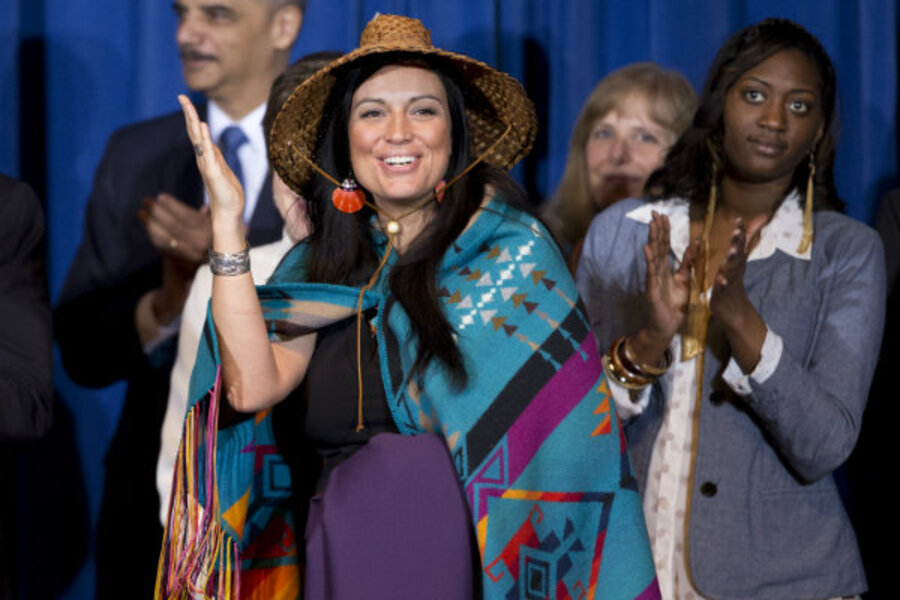
Manuel Balce Ceneta/AP
Tulalip Tribes of Washington state and trafficking survivor and advocate Tysheena Rhames react as President Obama announces that he is signing the Violence Against Women Act, March 7 at the Interior Department in Washington. Op-ed contributor Rodney Green says suggests three ways people can help combat sex trafficking around the world – and in their own backyards.
Learn about the factors that foster vulnerability to trafficking such as poverty, unsafe migration, subcultures of gender discrimination, lack of education, demand, and lack of law enforcement. Investigate reputable organizations like
International Justice Mission
or
GEMS
, examine their approaches to combat trafficking, and consider volunteering or supporting their interventions.
1 of 3
You've read
of
free articles.
Subscribe to continue.
Monitor journalism changes lives because we open that too-small box that most people think they live in. We believe news can and should expand a sense of identity and possibility beyond narrow conventional expectations.